The Shift from Scale to Substance
For decades, the corporate retreat was defined by its scale. Success was measured by the height of the atrium, the number of breakout rooms, and the efficiency of the buffet line. Executives gathered in grand, often cavernous hotels where the hum of the air conditioning was the only constant companion to their strategic planning. But recently, a quiet revolution has taken place. The tide is turning away from the anonymous luxury of international chains and toward the intentionality of the boutique hotel.
This shift isn’t merely a change in scenery; it is a reflection of a deeper realization within leadership circles. In an era of hyper-connectivity and digital noise, the most valuable commodity for an executive team is no longer just space—it is silence, intimacy, and the freedom to think without the weight of a thousand other guests. At El Capricho de la Portuguesa, we have observed this transition firsthand, as visionary leaders seek out environments that mirror the sophistication and serenity they hope to instill in their own organizations.
The Architecture of Thought: Why Setting Matters
Why does a boutique setting change the nature of a conversation? To understand this, one must consider the psychology of space. In a large convention hotel, the environment is designed for the masses. It is built to be neutral, to offend no one, and to accommodate everyone. This neutrality, while functional, often leads to a sterility of thought. When the walls around you are beige and the windows look out onto a generic cityscape, the mind tends to stay within established boundaries.
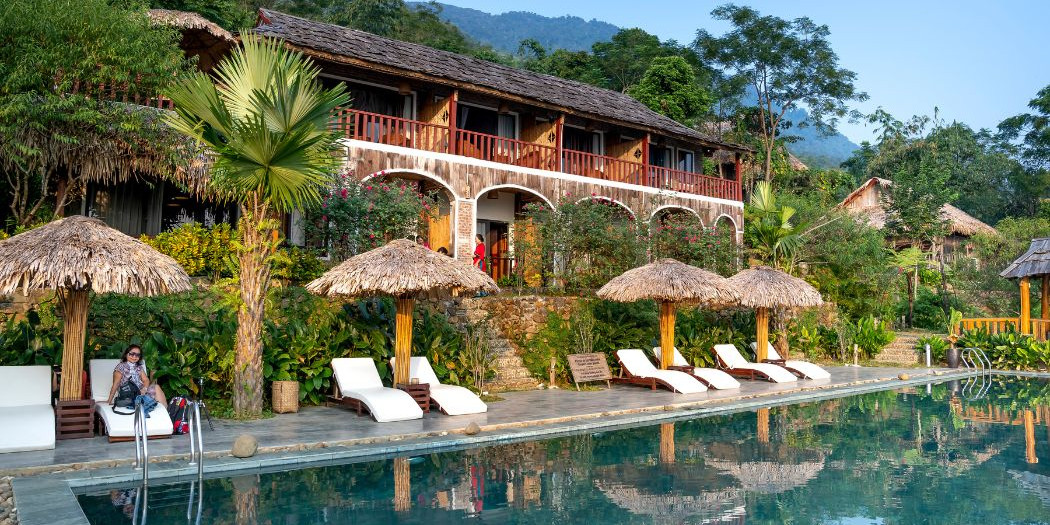
In contrast, a boutique hotel offers character. Whether it is the curated art on the walls, the historical resonance of the architecture, or the careful arrangement of a private garden, these details act as catalysts for the imagination. When executives step into a space that feels personal and handcrafted, they are subconsciously given permission to be more authentic themselves. The ‘corporate mask’ begins to slip, replaced by a more reflective, vulnerable, and ultimately creative state of mind.
The Power of Intimacy in Building Trust
Strategy is often seen as a cold, analytical process, but at its core, it is a human one. A company’s direction is determined by the trust and alignment of its leaders. In a massive resort, a leadership team can easily remain fragmented, retreating to their individual rooms or getting lost in the crowd of a busy lobby. The boutique experience, however, creates a shared sanctuary.
The intimacy of a smaller hotel fosters what we call ‘liminal moments’—the unplanned conversations over a morning espresso or the spontaneous debate that happens while walking through a quiet courtyard at dusk. These moments are often where the real breakthroughs occur. Without the distractions of a bustling hotel staff or hundreds of other delegates, a leadership team can finally hear one another. They are not just colleagues in a room; they are a cohesive unit sharing a singular experience.
A Curated Journey Over a Template Itinerary
Modern executives are increasingly weary of the ‘template’ retreat. They have seen the same PowerPoint presentations in the same windowless ballrooms across a dozen different cities. They are looking for something bespoke—a retreat that feels as unique as the challenges their company faces. Boutique hotels are uniquely positioned to offer this level of personalization.
- Exclusive Use: Many boutique hotels allow for total buyouts, giving a team complete privacy and the freedom to treat the entire property as their own home.
- Bespoke Wellness: Rather than a generic gym, boutique retreats offer curated wellness experiences, from private meditation sessions to farm-to-table culinary journeys.
- Deep Focus: The absence of public distractions allows for ‘deep work’ sessions that are impossible in more traditional settings.
- Authentic Connection: Smaller venues facilitate genuine interactions with the local culture and environment, grounding the retreat in a sense of place.
Environmental Resonance and Mental Clarity
There is a profound difference between a retreat that happens *at* a location and one that is *of* a location. Executives are moving toward boutique hotels because they want to feel grounded. The reflective tone of a secluded retreat allows for a recalibration of the nervous system. When the environment is serene—characterized by the sound of wind through trees or the soft light of a setting sun—the brain moves out of ‘fight or flight’ mode and into a state of expansive thinking.
This mental clarity is the ultimate goal of any corporate retreat. It is the ability to look at a complex problem and see the elegant solution. It is the ability to look at a colleague and see their potential rather than just their output. By choosing a boutique hotel like El Capricho de la Portuguesa, executives are making a statement that they value quality over quantity, and depth over distance.
Conclusion: The Future of Leadership is Reflective
As the corporate world continues to evolve, the demand for meaningful experiences will only grow. The move toward boutique hotels for corporate retreats is more than a trend; it is a homecoming to a more human way of doing business. It is an acknowledgment that the best ideas do not come from the loudest rooms, but from the most thoughtful ones.
When the noise of the world is silenced, and the distractions of the grand hotel are stripped away, what remains is the team, the vision, and the path forward. In the quiet corners of a boutique retreat, the future isn’t just planned—it is felt. And for the modern executive, that feeling of clarity and connection is the greatest luxury of all.